
Location guide · Istria
Vodnjan
A concise property guide to Vodnjan—historic centre, Galižana, Peroj, Barbariga, olive country, renovation, land, and essential checks.
Character
Stone town & olive countryStrongest fit
Space and authentic projectsProperty mix
Stone houses · villas · landKey trade-off
Car use and due diligenceWhy consider it
- A historic inland town surrounded by olive groves, dry-stone walls, kažuni, villages, and a wider territory reaching the coast.
- More space and architectural character than many prime coastal centres, but with greater variation in condition and infrastructure.
- A market of stone houses, renovation projects, family homes, villas, building plots, agricultural land, and coastal properties around Peroj and Barbariga.
- Planning status, legal access, utilities, heritage conditions, and the true scope of renovation are decisive.
View guide contents
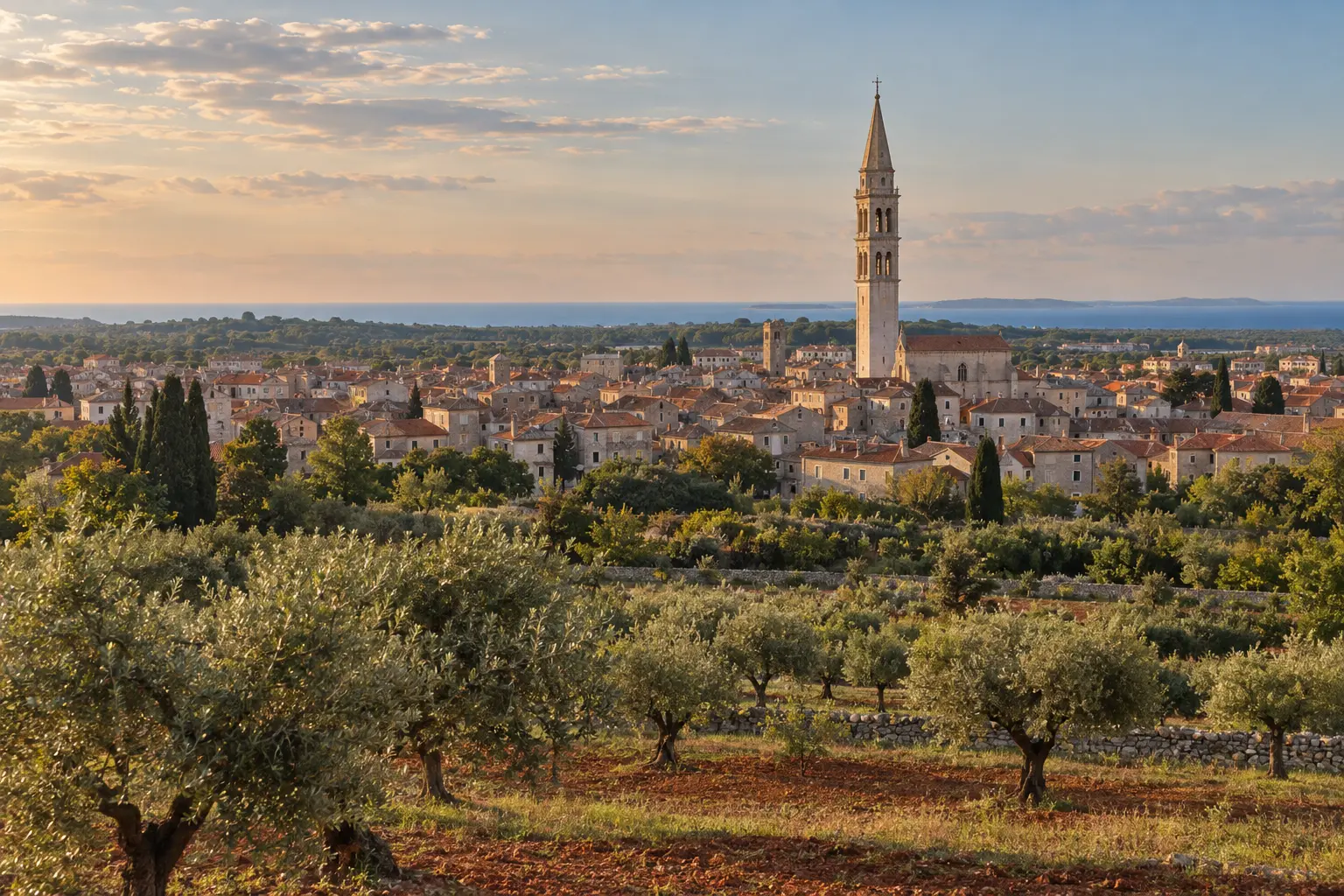
Vodnjan offers a different route into southern Istria. Its identity comes from a historic stone town, olive groves, dry-stone walls, kažuni, and nearby settlements rather than a single waterfront. The wider area stretches from inland neighbourhoods to the coast around Peroj and Barbariga.
This variety creates opportunity, but also demands precise comparison. A stone house in the centre, a family home in Galižana, a coastal apartment in Peroj, and land among the olives are four different ownership propositions.
Why buyers consider Vodnjan
Vodnjan suits buyers who value space, local character, and access to both Pula and the western coast. The official Istria tourism portal highlights its Gothic, Renaissance, and Baroque fabric, as well as Peroj, Barbariga, Galižana, and the traditional kažun landscape.
Compared with a tightly held waterfront centre, buyers may find broader property types and more renovation potential. The compromise is greater dependence on a car and more variation in road access, utilities, building condition, and planning status.
In the Vodnjan area, “more land” is valuable only when its boundaries, access, designation, utilities, and permitted use are independently confirmed.
Choose your part of the area
Use these as practical search zones rather than strict boundaries.
| Search area | Best suited to | Check carefully |
|---|---|---|
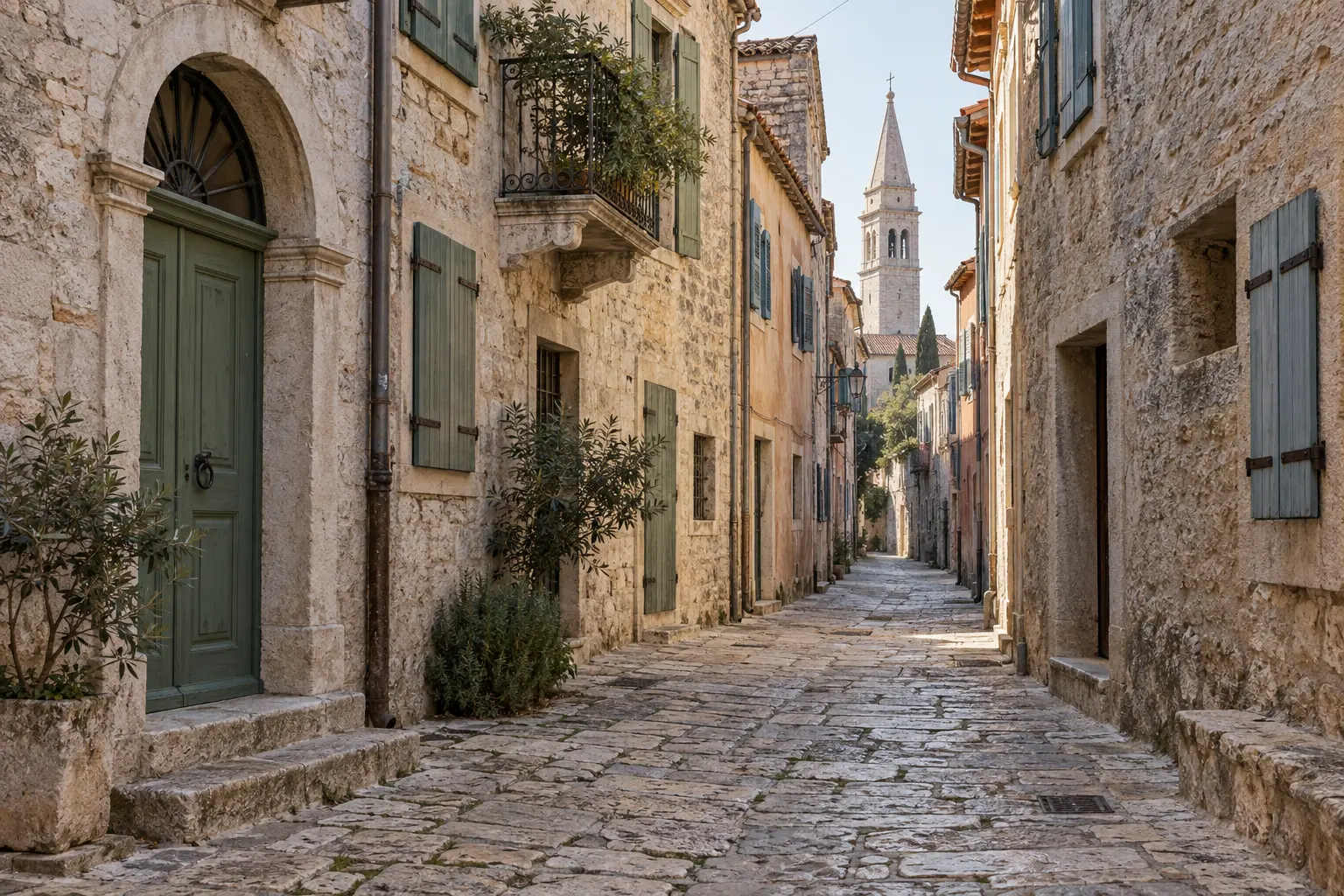
| Vodnjan historic centre | Stone character, renovation, walkable local life, and distinctive architecture. | Heritage conditions, structure, roof, damp, shared walls, vehicle access, parking, and the full renovation scope. |
| Outer Vodnjan | Family homes, newer construction, gardens, and practical road connections. | Neighbouring development, road noise, drainage, utilities, permits, and walking distance to daily services. |
| Galižana | Village living, houses, plots, and access toward Pula and Fažana. | Exact micro-location, road and rail noise, legal access, infrastructure, boundaries, and planning designation. |
| Peroj | Coastal use, apartments, houses, sea access, and views toward Brijuni. | Real walking route to the sea, parking, summer traffic, salt exposure, wastewater, and future construction. |
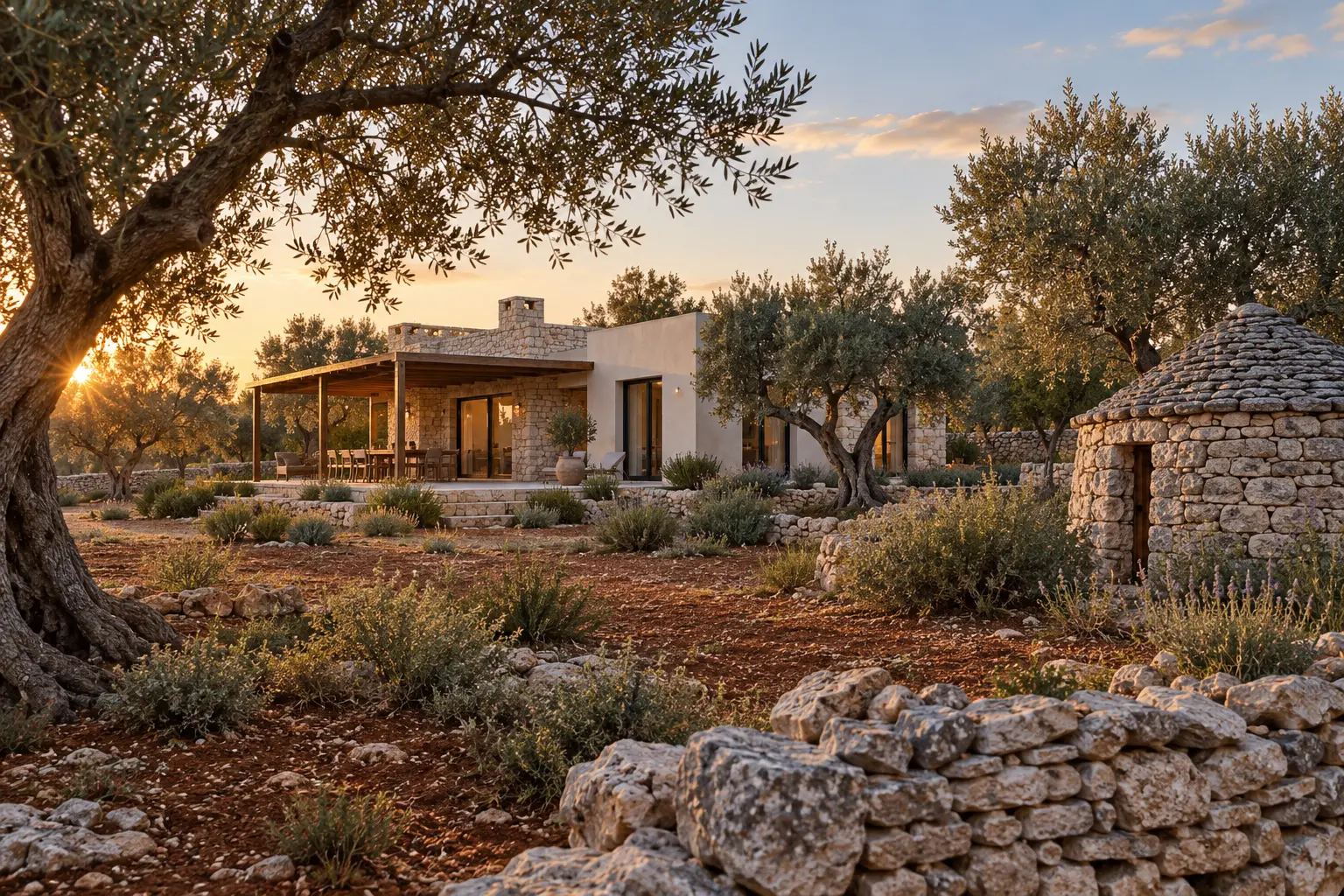
| Barbariga, Betiga and rural olive country | Holiday homes, villas, larger plots, privacy, and landscape. | Seasonality, car dependence, road quality, utilities, fire risk, agricultural restrictions, and legal buildability. |
Drive the routes you expect to use and walk the last section to shops or the sea. A short map distance can hide an uncomfortable road, missing pavement, or steep maintenance burden.
Match the property to the ownership plan
A historic stone house can deliver exceptional character, but renovation should start with structure and records, not finishes. Review walls, roof, floors, moisture, openings, connections, protected elements, access for works, and whether every existing part is legal.
A completed family house or villa is easier to price, yet additions, pools, terraces, storage, and auxiliary buildings still need documentary confirmation. For occasional use, include garden, security, ventilation, water, pool, and storm checks in the annual budget.
Land requires the clearest discipline. Agricultural land is not automatically a residential building opportunity. Confirm the exact parcel, title, access, boundaries, current spatial designation, development conditions, utilities, and all restrictions before discussing a design.
Checks that matter here
Alongside standard Croatian legal and technical due diligence, pay particular attention to:
- alignment of title, cadastral information, actual boundaries, buildings, terraces, pools, and auxiliary structures;
- written legal access and whether the physical road is suitable for normal vehicles and construction works;
- spatial-plan designation, minimum parcel rules, permitted use, heritage conditions, and neighbouring development;
- electricity, water, wastewater, telecommunications, drainage, and the real cost of new connections;
- structure, roof, moisture, ventilation, stonework, and earthquake or settlement cracks in older houses;
- maintenance of olive groves and land, wildfire exposure, vacant-home supervision, and realistic rental rules.
The City of Vodnjan-Dignano publishes current spatial plans. Use them as a starting point, then confirm the specific parcel and project with qualified local legal, planning, and technical professionals.
A focused first viewing day
Compare three ownership models:
- a stone house or renovation project in historic Vodnjan;
- a completed home in Galižana, outer Vodnjan, or Peroj;
- a villa or plot in the rural and coastal hinterland.
Record access, utilities, boundaries, noise, sun, distance to daily needs, neighbouring parcels, and the complete renovation or maintenance budget.
Vodnjan works best for buyers who choose the landscape and level of responsibility deliberately. Start with intended use and evidence; let character become the advantage rather than the distraction.
Alma Dom
Could Vodnjan fit your property plans?
Share your preferred property type, budget, and intended use. Alma Dom can help turn the location shortlist into a focused search.