
Viewing notes
The second viewing: see the home beyond the photographs
A practical second-visit checklist for an Istrian property: the route, the building, the questions and the documents to request.
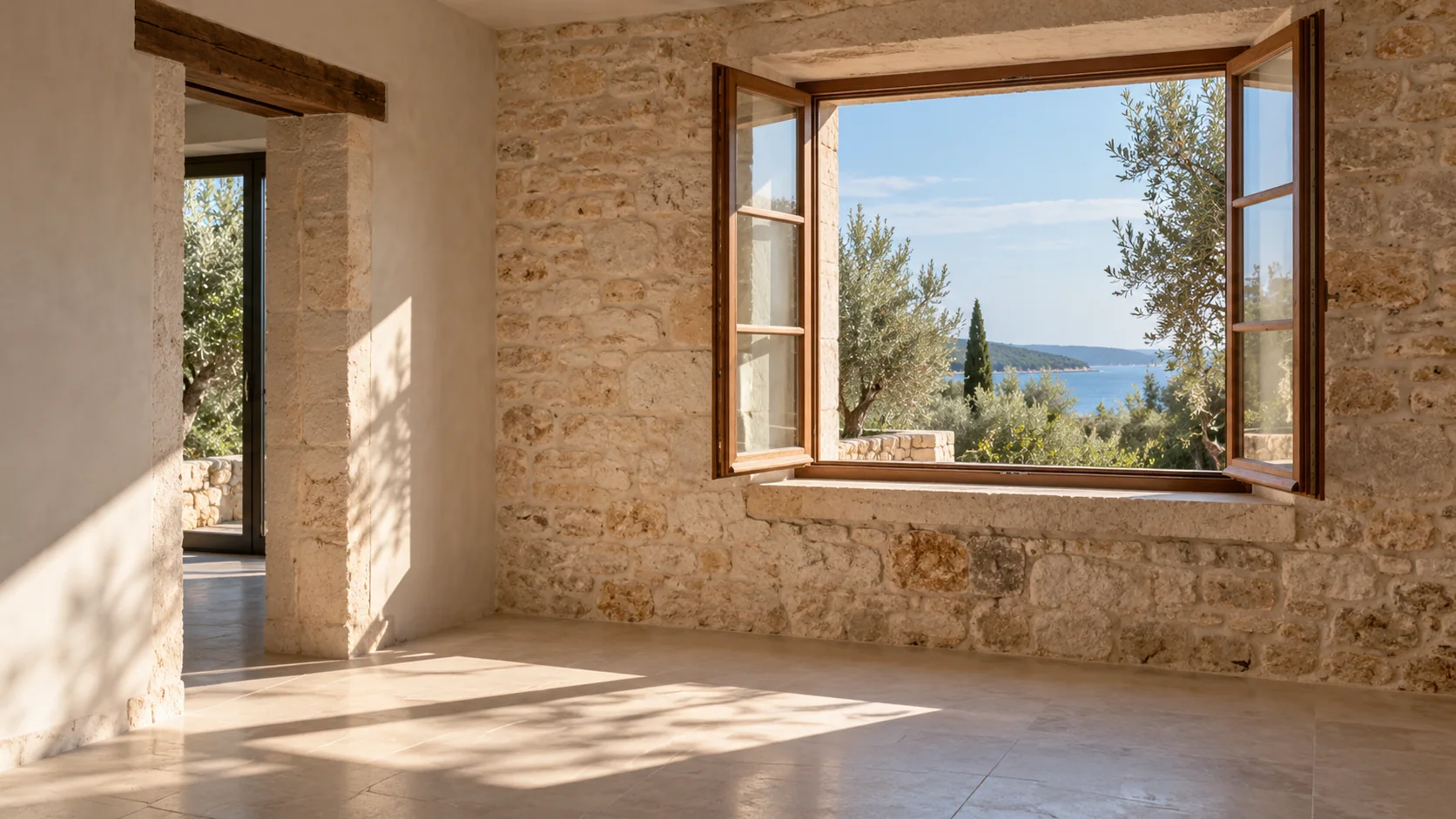
The first visit tells you whether a home interests you. The second should tell you what living with it could ask of you. Arrive with fewer impressions to collect and a short list of things to check.
01 — Start before the front door
Take the route you would normally use, rather than the most scenic one. Find the actual parking place, carry an imaginary suitcase to the entrance and walk to whatever matters most to you: a shop, a swimming place or the nearest year-round service.
If possible, return at a different hour from your first visit. Listen for traffic and neighbouring activity. A street can feel very different when a busy terrace opens or when the evening becomes quiet.
Write down: what works on a normal day, what depends on the season and what still needs checking.
02 — Look at the home as a set of systems
Open the windows and doors. Notice ventilation, shade, heat, odours and any visible marks around walls or openings. Ask when the roof, windows, heating and cooling equipment were last serviced. In an apartment, ask about shared areas and how building maintenance is organised; in a house, include the terrace, garden, drainage and access road.
A viewing is no substitute for a professional inspection. If something is unclear, note it as a question for a qualified person rather than guessing at a repair cost.
03 — Ask for the paper trail
The Croatian government’s property-purchase guidance advises buyers to check the land-registry extract, the relevant building documentation, the use permit and the energy certificate where applicable. Ask which documents are available for this exact property and have a qualified adviser review any mismatch before committing.
A beautiful renovation, a sea view or a confident verbal answer does not resolve a document question. Keep the visual assessment and the formal checks on separate lists.
Leave with three lines, not fifty photographs
Before you drive away, record one thing you liked, one concern that needs evidence and one question whose answer could change your decision. Send the questions while the visit is fresh. If you cannot get a clear answer, keep the property on hold rather than turning an unknown into an assumption.
For the wider process, read the buying guide or create your property brief.
Your next step
Turn a preferred setting into a focused search.
Share your intended use, preferred locations, property type, budget and timing with the Alma Dom team.
Describe your property search